It is with this in mind that we propose to examine the most important festivals for the early Christians.
First of all, we must remember that Jesus and his apostles based their practices and rites on Judaism.
We must also remember that the apostles were the first Christians.
With this in mind, we propose to answer which were the most important festivals for the first Christians.
As a supplement, we suggest that you read: Characteristics of Catholics.
What were the most important feasts for the first Christians and why?

Baptism and its meaning
In terms of the most important celebrations for the early Christians, baptism was truly significant.
It was characterised by the pouring of water over the body of the baptised in the name of the Father, the Son and the Holy Spirit.
Through this celebration they are cleansed of their sins by the Holy Spirit, represented by the water poured over their bodies.
On the other hand, it signifies the commitment of faith in God and His Son Jesus Christ, following His commandments and laws.
This commitment of faith in God and Jesus is one of the most important celebrations for the early Christians.
In fact, Jesus himself was baptised by John the Baptist, making it one of the most important celebrations.
But Jesus was also baptised as an example of faith in God’s word and his mission to spread it.
It was in this celebration that the followers of God and Jesus Christ received their status as Christians.
In fact, it was a way for the early Christians to acknowledge the gospel and membership in the Christian community.
The Lord’s Supper and its meaning
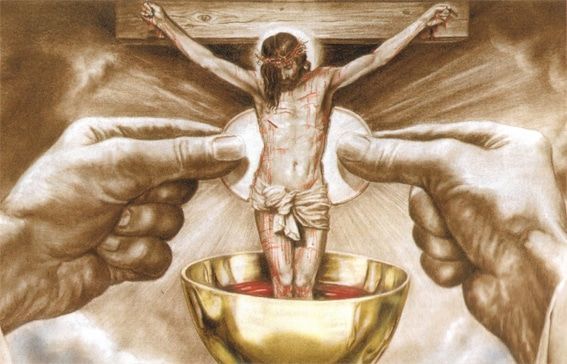
A significant antecedent of early Christian celebrations was the Last Supper.
In it, Jesus Christ and his apostles celebrate the Jewish Passover and explain the reasons and rites for this celebration.
From that moment we can say that the first great celebration of the early Christians was born.
We affirm this on the basis that at that moment Jesus introduces a new symbolism parallel to the Jewish custom.
What new symbols are we talking about? Jesus Christ identified the bread as his body and the wine as his blood.
He went on to specify that the bread was his sacrificed body and the wine his blood shed in martyrdom.
He went further and asked the apostles to offer this thanksgiving to God in his name from then on.
Drawing on Jewish custom, he introduced a variant which represented him as the Lamb of God, sacrificed to save humanity.
As Christianity developed, this ceremony became one of the most important celebrations and was known as the Lord’s Supper.
The laying on of hands and its meaning
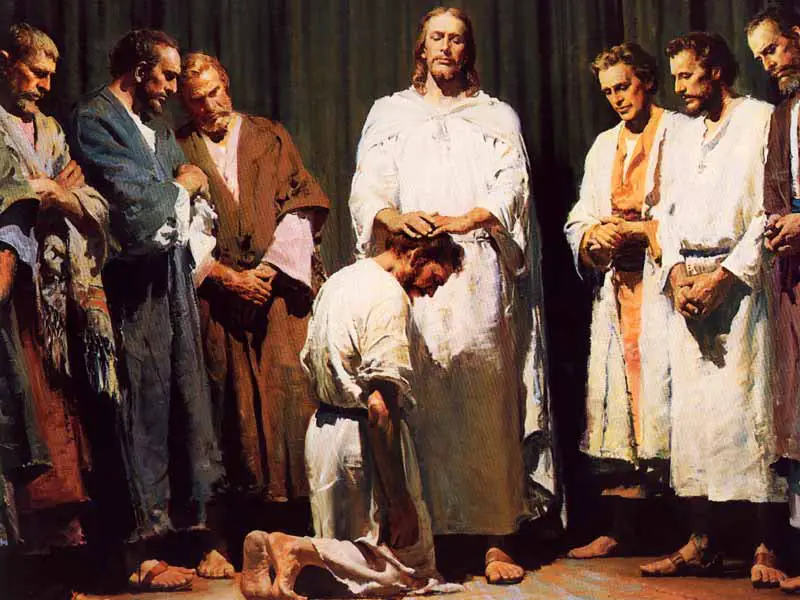
The laying on of hands was the most important celebration for the early Christians because of the variety of occasions on which it was practised.
That is to say, the laying on of hands was used to heal the sick and the afflicted.
It was also used to assign tasks, missions and ministries for the common good of the early Christians.
It is characterised by the laying on of hands on the head of the person designated to offer healing or protection through the Holy Spirit.
In this sense, we emphasise that the hands represent the relationship between people, the energy, the diligence of people.
We conclude that the laying on of hands is, among other things, the most important celebration of the early Christians because it represents indulgence, blessing.
For more information on religion, we suggest you read: What is a Christian ministry?
Confirmation and its meaning
For the first Christians, confirmation was important because it was the strongest inner bond that united them to the words of God and Jesus.
We can say that confirmation consolidates baptism. It brings us strongly into the Word of God.
It is so important that it is celebrated only once in the life of the person to whom it is given.
It is then a matter of rooting the Christian mission and gaining strength to give witness to faith in action within the community.
This celebration takes place immediately after baptism, followed by the Lord’s Supper. This underlines the importance of the three celebrations.
Penance and Reconciliation – its importance
This celebration is fundamental for the early Christians in that it is a time of repentance and reconciliation with God.
To do this, they identify and confess their sins committed after baptism, do penance and ask God’s forgiveness.
An example of the celebration of penance and reconciliation is given by Jesus himself before his arrest and crucifixion.
At that moment, Jesus confessed his weakness and his lack of strength to continue the mission that God had entrusted to him.
By identifying himself and confessing to God, Jesus asks for forgiveness and strength to continue his mission.
With this example, we want to show the importance of this celebration for the first Christians.
To deepen your religious knowledge, read why Catholics venerate saints.
The Anointing of the Sick and its meaning
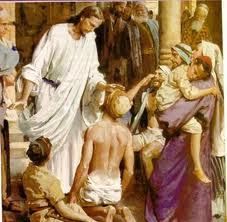
This celebration allows those who are seriously or terminally ill to reconcile themselves with their life’s deeds and offences against God.
The aim is to obtain for the sick the graces to be healed or to die in the peace of God.
The service and its meaning
For the early Christians, the celebration of the Lord’s Supper is nothing other than an understanding and imitation of Jesus’ actions in life.
In this celebration, the teachings of Jesus are applied in terms of giving to others and faith in God.
Living out the teachings of Jesus to others is what makes this celebration meaningful.
Marriage and its meaning
The celebration of marriage is the smallest human community that develops and grows.
It is in this celebration that the foundations of the couple’s community, love and respect, are defined.
This celebration is carried out by the free will of the spouses, but under the strict laws of God and the example of Jesus.
This is an attempt to answer the question of what were the most important celebrations for the first Christians.
For more information, we suggest you read: Characteristics of Catholics.